DIGITAL & STRATEGIC
UX DESIGN PRACTICE



SERVICE DESIGN
From prototype to public pilot: creating a simpler way to report flooding
Developing and piloting a digital service that enables residents to report flooding more easily while improving collaboration between Risk Management Authorities.
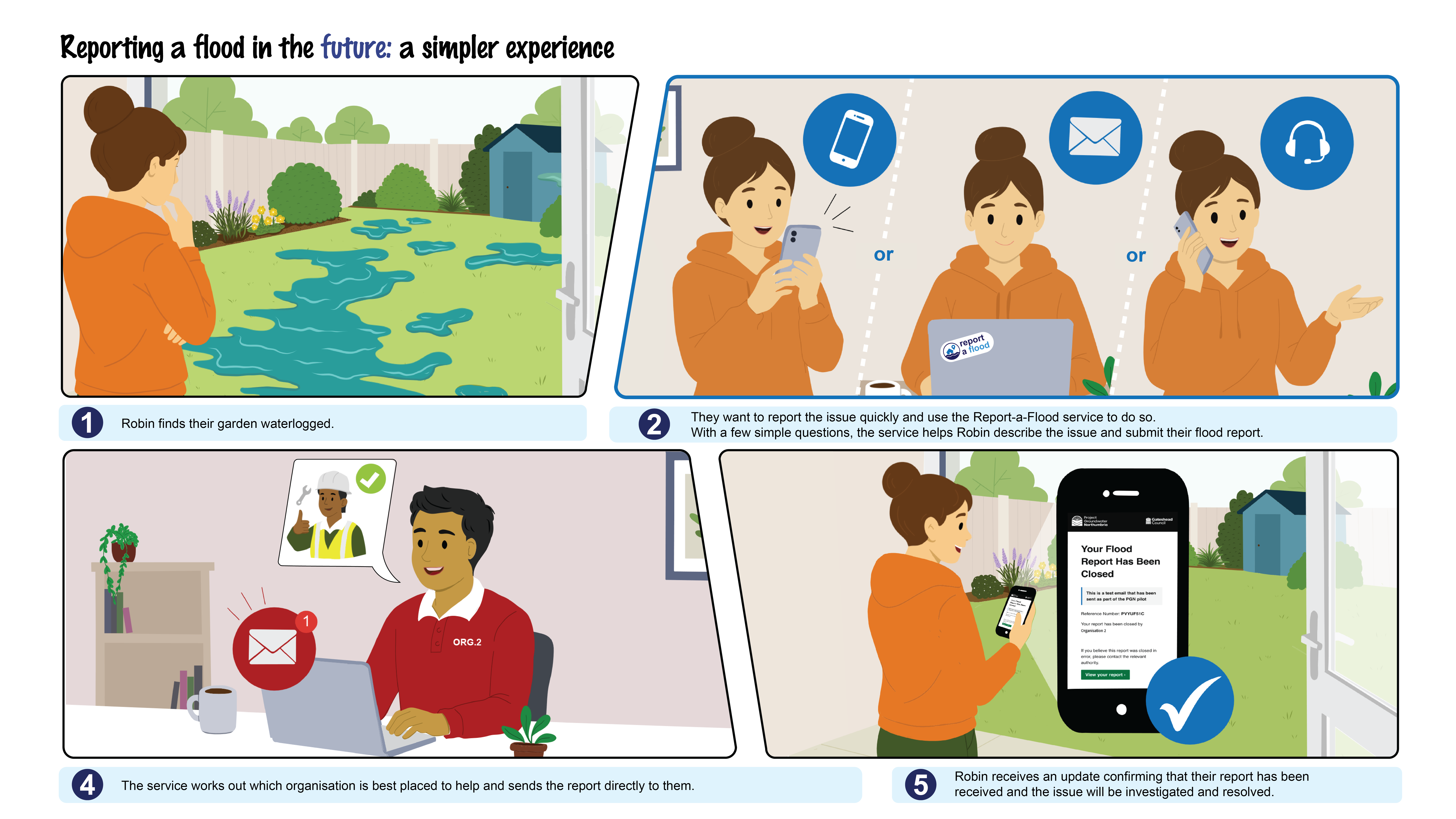
When residents need to report flooding, knowing where to start is not always straightforward. Different organisations are responsible for different types of flooding, each with their own reporting routes, systems and processes. Residents are often expected to identify the appropriate authority before submitting a report, despite having little visibility of organisational responsibilities.
This fragmented approach can create a confusing experience for communities and make it more difficult for authorities to share information and coordinate responses. Residents may be unsure whether their report has reached the right organisation, while RMAs often work across separate systems and datasets, limiting opportunities for collaboration and a shared understanding of incidents.
Date
Location
Arup is developing and piloting the Report-a-Flood Service as part of Project Groundwater Northumbria (PGN), a Defra Flood and Coastal Resilience Innovation Programme project led by Gateshead Council.
Working with local authorities, the Environment Agency, Northumbrian Water Group and other partners, the service provides a single reporting point for residents and a shared data source for Risk Management Authorities (RMAs). The aim is to simplify how flood incidents are reported, improve visibility of information across organisations, and help ensure reports reach the authorities best placed to respond.
The Report-a-Flood Service is simplifying how communities report flooding while helping authorities work more effectively together. By replacing multiple reporting routes with a single point of contact and a shared source of flood incident data, the service aims to improve the reporting experience for residents, increase visibility of incidents across organisations and support more coordinated decision-making. The pilot programme is also generating the evidence and implementation foundations needed to support long-term adoption and future scaling.
The Report-a-Flood Service tackles a common challenge: residents often have to navigate multiple organisations, reporting routes and systems without knowing which authority is responsible for different types of flooding. This fragmented experience can make reporting difficult and leave residents uncertain about where their information has gone. For Risk Management Authorities (RMAs), disjointed reporting makes it harder to build a shared picture of incidents, exchange information and coordinate an effective response.
Working with Gateshead Council, the Environment Agency, Northumbrian Water Group, Newcastle City Council and other partners, Arup is developing and piloting a service that combines a Single Point of Contact (SPoC) and Single Point of Data (SPoD) system, creating a more connected flow of information from initial reporting through to incident management. By bringing people, processes, data and technology together, the service aims to make flood reporting simpler for the public, strengthen collaboration between RMAs, and support more coordinated and effective responses to local flood risk.
Following the Government Digital Service (GDS) framework, the service has progressed from Discovery and Alpha through a Technical Pilot and is now entering a Focused Pilot. This next phase moves the service towards real-world use, generating further evidence on usability, effectiveness and operational value, while testing how it can support collaboration across organisational boundaries. The findings will help inform future implementation, governance and scaling.
Project Highlights
Applying service design to transform flood reporting
Arup adopted a service design-led approach that brought together residents, operational teams, technical specialists, and decision makers from multiple RMAs. Rather than focusing solely on technology, the team examined the end-to-end flood reporting journey, including resident needs, RMA reporting and incident management processes, operational workflows, governance arrangements, responsibilities between organisations, and opportunities for collaboration.
Through stakeholder engagement, workshops, user research and process mapping, Arup identified key pain points within existing reporting processes and translated these into user needs, service requirements, and target workflows. These insights shaped a common vision for a more coordinated flood reporting service and informed the design of both the operational and technical solution.
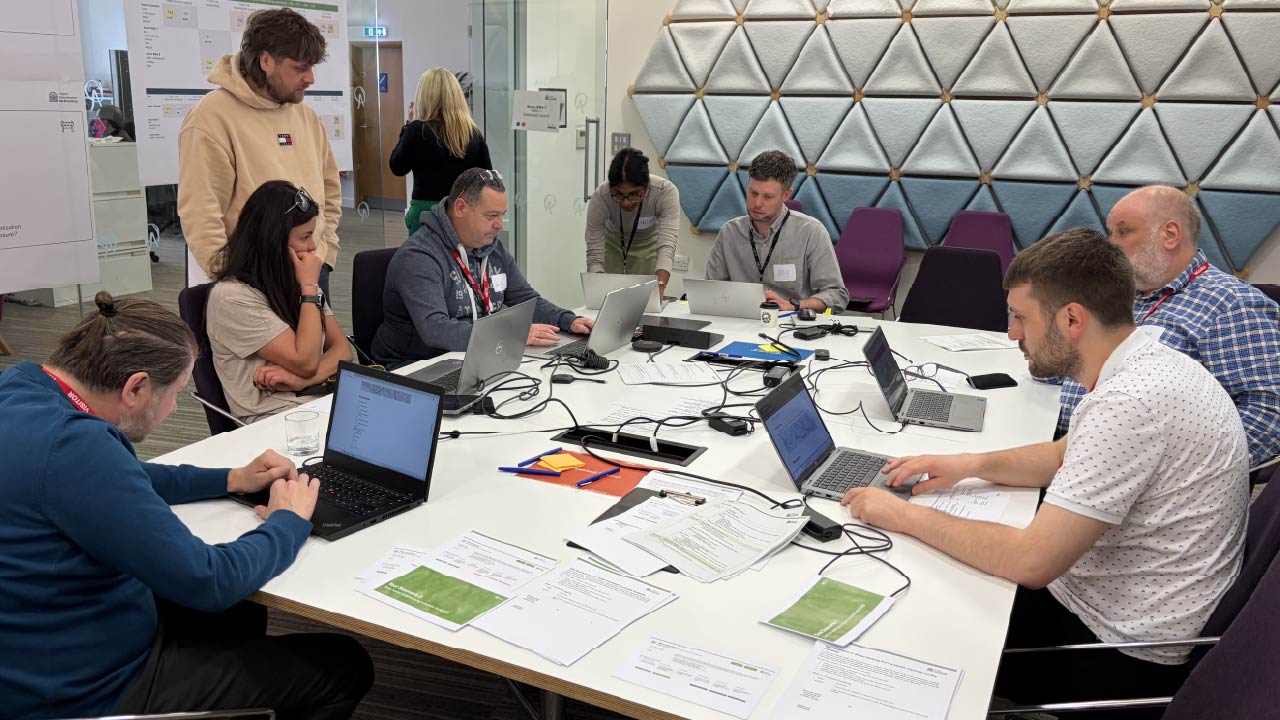
Working groups involving local authorities, the Environment Agency, Northumbrian Water, and wider partners enabled the service to be co-designed and tested throughout development, ensuring decisions were grounded in real-world operational requirements.
Turning user needs into a digital service
Arup structured the development of the Report-a-Flood service around the Government Digital Service (GDS) framework, combining service design, user research and digital product development to transform complex user and operational requirements into a practical, user-centred service.
During the Discovery phase, extensive stakeholder engagement, user research, service mapping and analysis of existing flood reporting processes across Risk Management Authorities (RMAs) helped identify key pain points and opportunities for improvement. These insights informed user needs, service requirements, triage processes and the target operating model for the service.
In the Alpha phase, service concepts were rapidly prototyped in Figma and iteratively tested with residents, operational users and stakeholders. Continuous feedback shaped and refined the design before it was developed into a coded minimum viable product (MVP) and evaluated through a Technical Pilot.
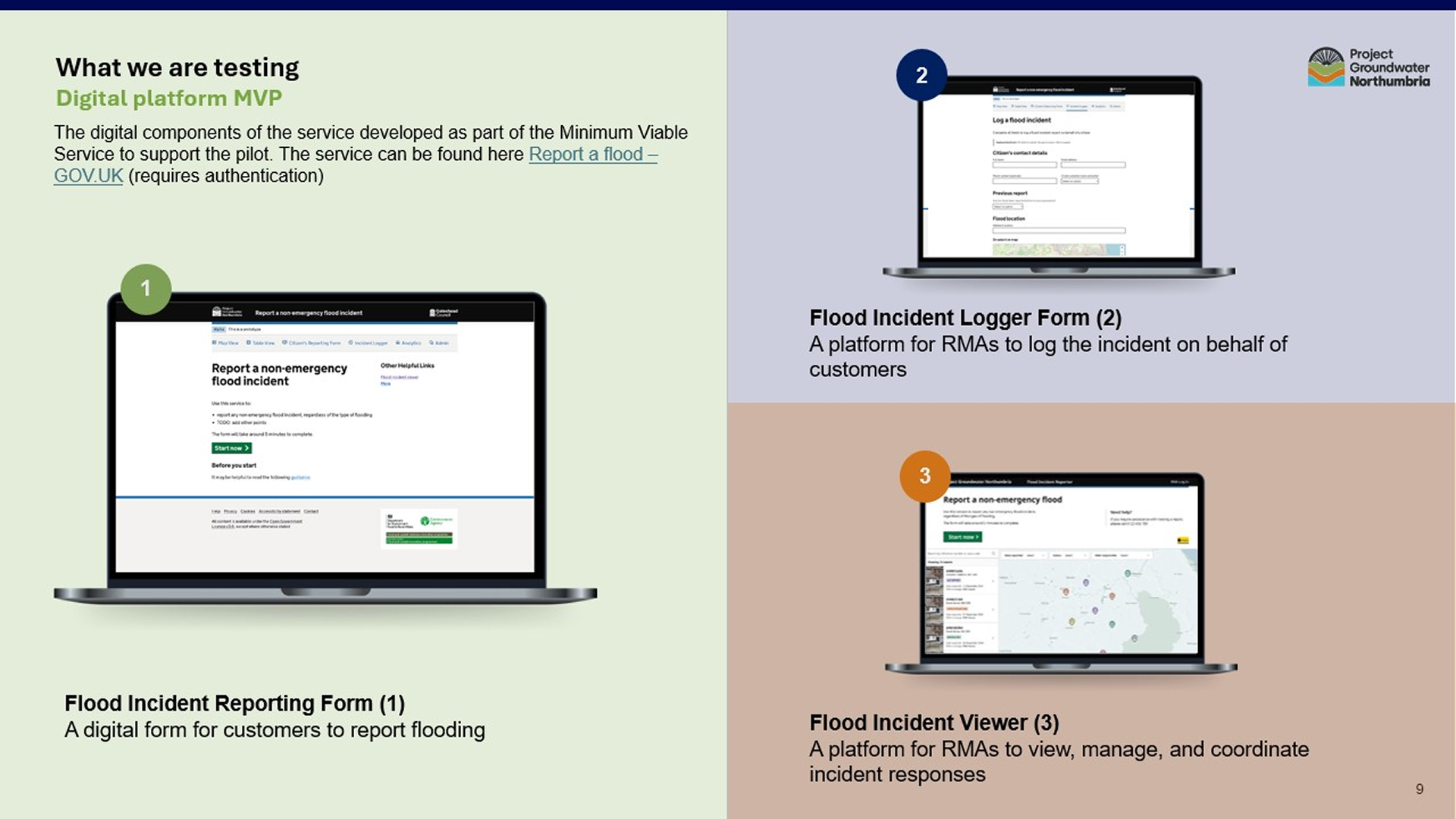
The resulting platform is a modern web application built using React, NestJS and PostgreSQL, supported by Azure services. It includes a resident-facing Flood Incident Reporting Form, an Incident Logger for authority staff, and a shared Flood Incident Viewer that enables collaborative incident management. Geospatial and public datasets, including local authority boundaries, are also being integrated to support more accurate triage and routing of reports to the most appropriate organisations.
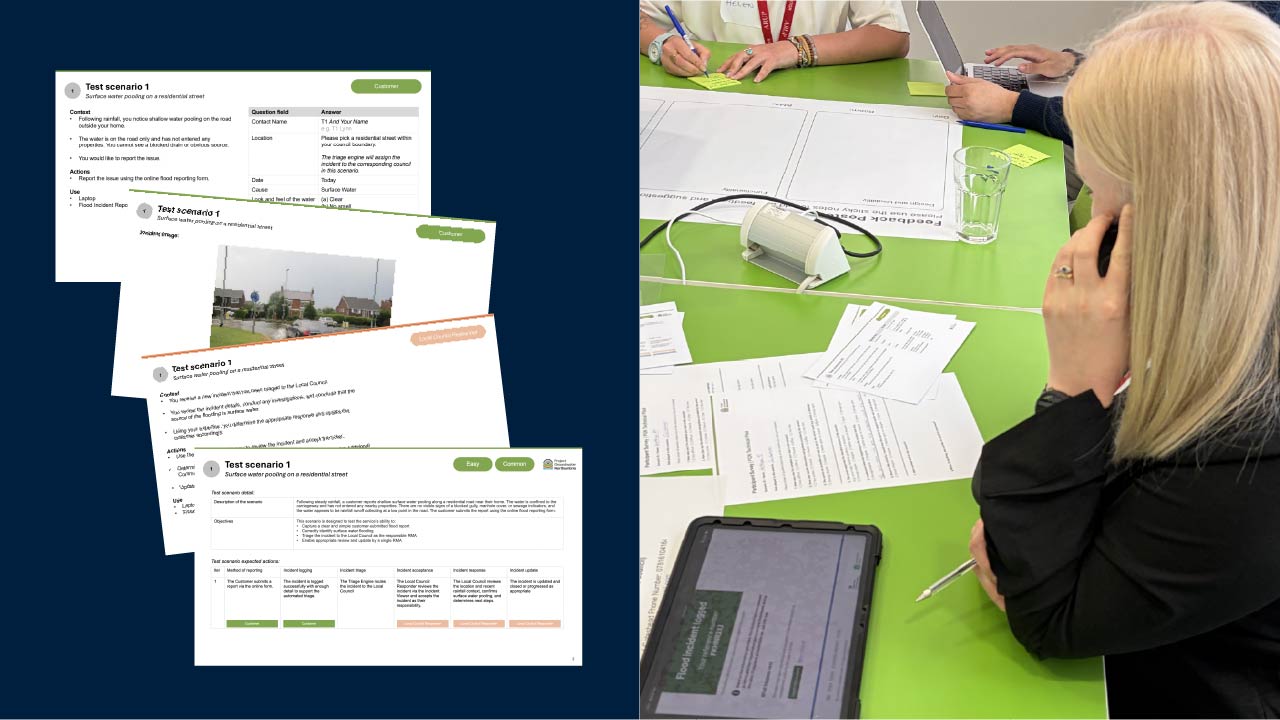
The service is now progressing through Beta (Focused Pilot), where realistic, scenario-based testing is providing continuous feedback to inform ongoing development. This iterative approach is strengthening functionality, interoperability, data quality and user experience, while ensuring the service continues to meet both resident needs and operational requirements.
Building the foundations for future adoption
The Technical Pilot demonstrated the potential for a more coordinated approach to flood reporting and incident management. Participants successfully completed reporting, triage and collaborative workflows across multiple organisations, providing confidence in the core service concept while identifying opportunities for refinement.
The project is now moving beyond prototype testing towards real-world adoption. Through the Focused Pilot, Arup and its partners are continuing to build the evidence base, governance arrangements and implementation strategy required to support long-term operation and future scaling.
By combining service design, digital delivery and cross-sector collaboration, the Report-a-Flood Service is helping lay the foundations for a future where flood reporting is simpler for communities and more connected for the organisations responsible for responding.